Applications
Standalone Deployment
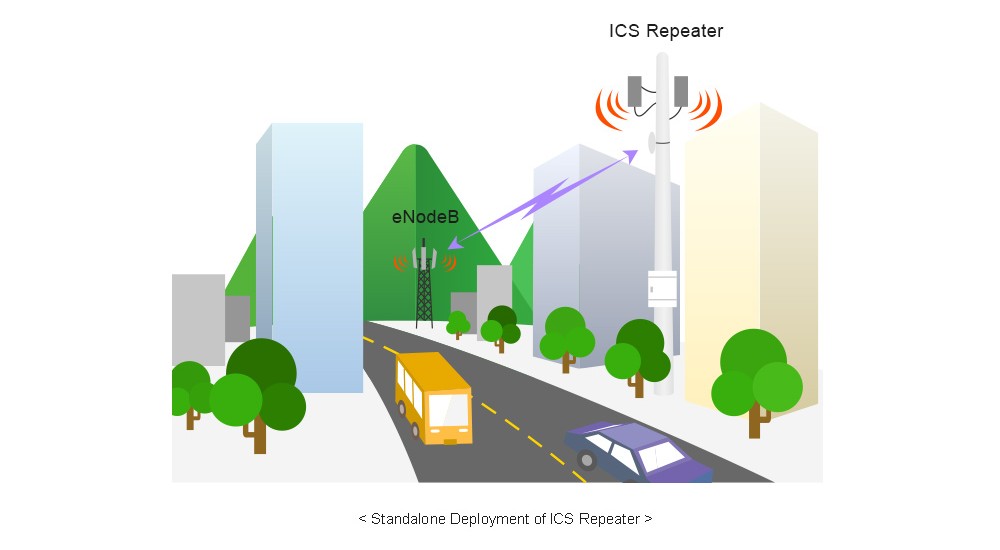
The ICS repeaters can be deployed at shadow areas with a single donor antenna and one or two service antennas. It receives the RF signal from NodeB or eNodeB and boosts it to transmit to user terminals for downlink, and the opposite direction for uplink. In the migration stage from 3G to 4G, some ICS models can boost WCDMA and LTE signals at the same time.
Cascading
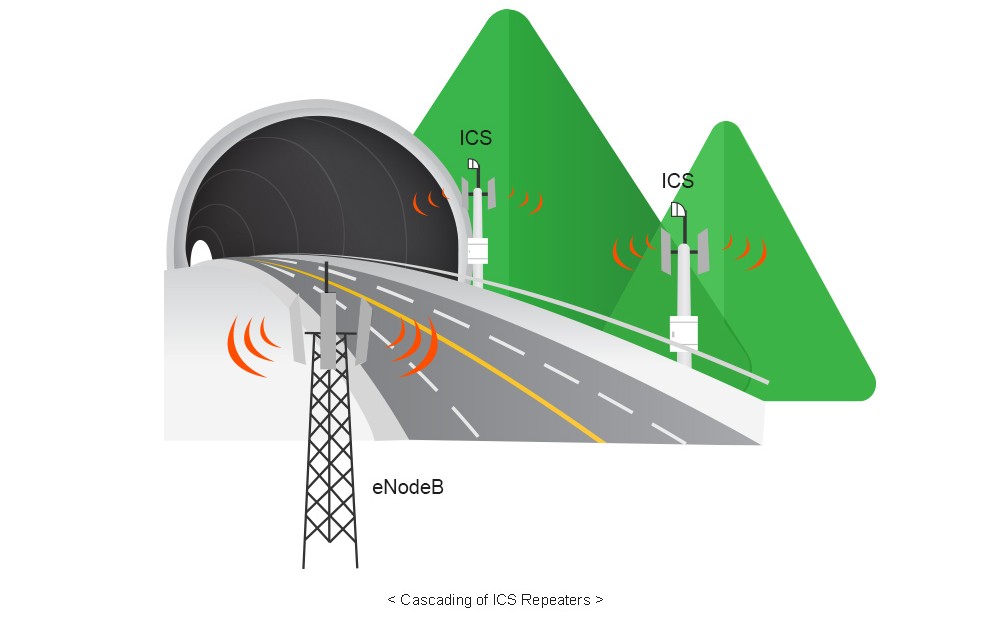
In addition to the operation in the standalone deployment, a few or several ICS repeaters can also be deployed in cascade. In this type of application, the ICS repeaters, after the first stage, receive and transmit RF signals from and to the ICS repeater deployed in the previous stage. In practice, for safe operation of cascading, a few additional features are needed.